


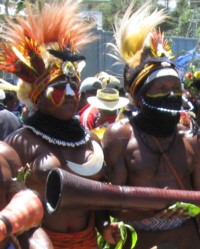

The Ipili, sometimes called Ipili-Payala, are an indigenous people of the Highlands of Papua New Guinea, especially in the Porgera and Paiela valleys of Enga Province. Their communities have long been connected through marriage, trade, and travel with neighboring highland groups, forming networks that help sustain cultural continuity across rugged mountain terrain. Their language belongs to the Engan family of the New Guinea Highlands and remains actively used in daily life, carrying oral histories, traditions, and identity from generation to generation.
Over time, contact with mission efforts and wider national society has brought increasing exposure to education, churches, and broader economic systems while many local customs and clan structures remain important. Cultural celebrations continue to affirm identity, often featuring traditional ceremonies that honor community and heritage.
Life among the Ipili is shaped by the rhythms of highland village life, where extended families and clan relationships form the core of social structure. Communities are often closely tied to the land, and cooperation in gardening, food production, and local exchange strengthens bonds within and between families.
Traditional arts and expressions remain meaningful. Ceremonial gatherings include singing, dancing, storytelling, and elaborate attire made with natural materials such as feathers, shells, and plant fibers. Musical instruments like bamboo pipes are played for enjoyment and at community events, reflecting a rich heritage of creativity and shared celebration.
Language and cultural identity are highly valued, and there are ongoing efforts by community members to preserve and promote their traditions while engaging with modern opportunities.
Many among the Ipili identify as Christian, and churches play a visible role in community life. Christian teaching has shaped spiritual practices, gatherings, and moral frameworks, often alongside a continuing respect for ancestral heritage and traditional expressions of identity. Care should be taken to recognize the diversity of personal faith within communities, as individuals and families may express belief in different ways.
Scripture is available in a language they understand, including translated portions and the New Testament, supporting worship, teaching, and personal devotion.
Like many highland communities, the Ipili benefit from continued encouragement in spiritual growth, biblical understanding, and leadership development within local churches. Strengthening families and nurturing younger generations in faith remain important as communities navigate change and new influences.
There is also value in supporting culturally sensitive discipleship that honors local identity while deepening understanding of the gospel. Access to Scripture resources, training for leaders, and opportunities for fellowship can help sustain healthy and vibrant Christian communities.
Pray for believers to grow in their knowledge of Christ and in unity with one another.
Pray for pastors and church leaders to have wisdom, humility, and perseverance as they serve their communities.
Pray for families to be strengthened, with faith passed on lovingly to children and youth.
Pray that Scripture engagement would deepen, bringing transformation and hope.
Pray for a growing vision among the Ipili to share the love of Christ with neighboring peoples.
Scripture Prayers for the Ipili, Ipili-Payala in Papua New Guinea.
https://peoplegroups.org/people_groups/pg009987/
https://dbs.org/en/research/languages/ipi
https://tribesofpapuanewguinea.com/destination/ipili-humari-sianda-festival-17th-19th-december-2025-highlands-region/
https://www.thenational.com.pg/my-culture-my-pride-and-identity/
| Profile Source: Joshua Project |


